


History
There is but a handful of manufacturers of household appliances that have a long history. A real history as opposed to a marketing legend, a history that is captivating and grounded in fact. The Benoît brand is by right named after its founding father, gifted engineer and inventor Nicholas Benoit.
Surprisingly enough, there is still no documented biography of Nikolai Benois, the founder of acoustic detection of hidden guns. His name has not been enshrined and the archives with information about him on file are little studied or classified. His inventions are still classified today.
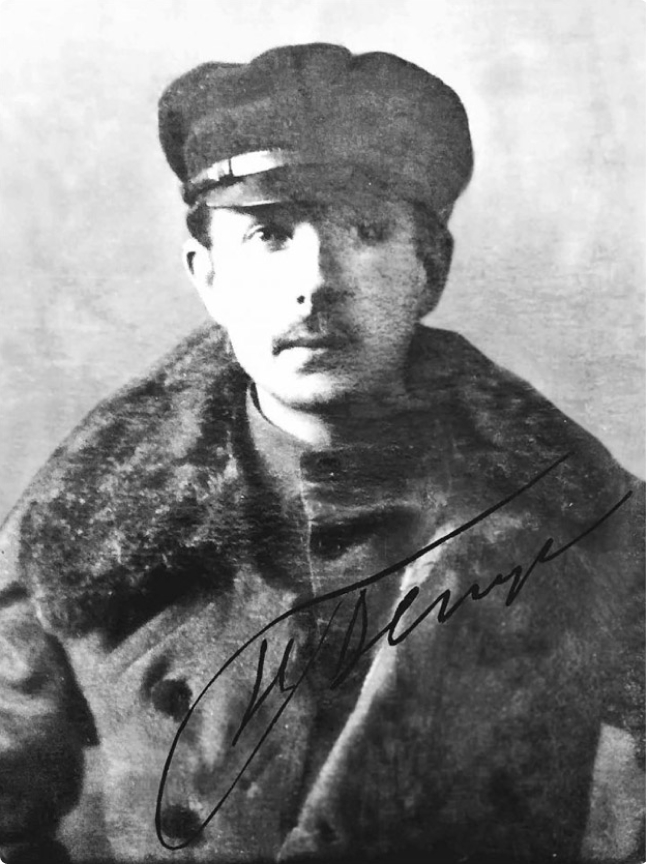
That year, Nikolai visited a few watch factories and developed a love for mechanics. Then, to the surprise of everyone, he resolved to join the ranks of the army. At the age of 21, he was enlisted in an elite regiment at the imperial court – the Leib Guards of the Preobrazhensky Regiment.
While in the army, Nikolai ended up fighting in the Russian-Japanese War. During this time, he witnessed the deep-seated flaws of the ruling regime and became a dedicated socialist. On the battlefields, Benoit learned the tricks of artillery. Then he found himself wondering whether the coordinates of enemy guns could be detected by the sound of a volley. That is when he invented a sound-measuring station.
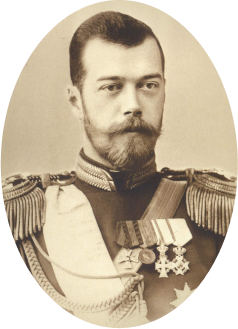
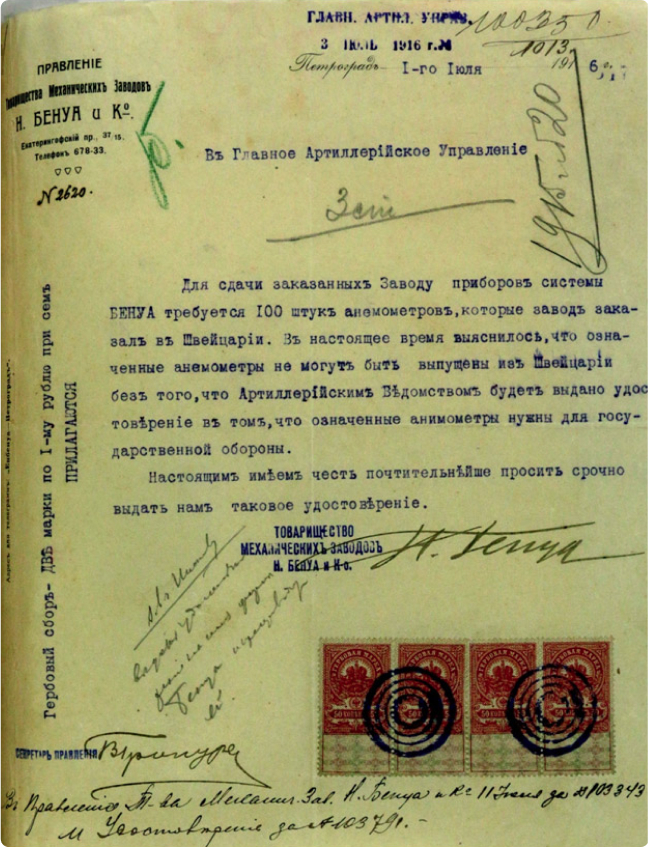
This discovery roused interest in the Main Artillery Directorate of the Russian Empire and the Minister of War reported to Nicholas II about it. The sovereign, even though aware of Benoit's revolutionary sentiments, gave the green light to the designer and ordered his invention classified.
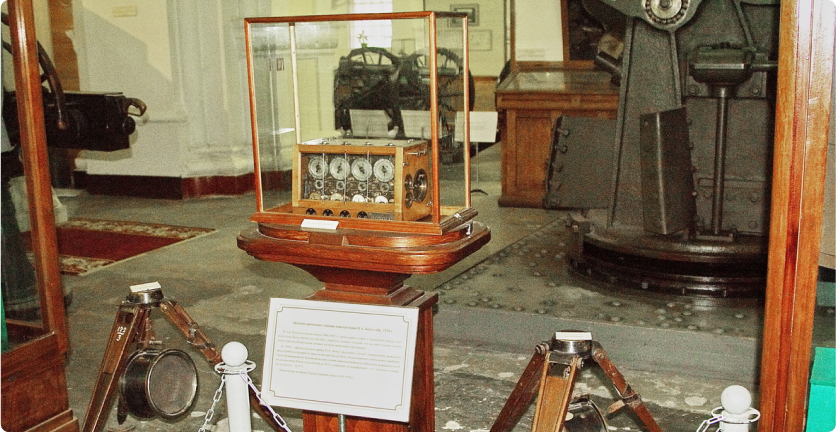
Over time, the workshops which produced Benois devices evolved into a factory, which during the First World War, due to the threat of the German offensive on Petrograd, was moved to Paratsk, which is now called Zelenodolsk. In January 1917, Benoit bought a steel mill, built but never launched, from the bankrupt Volga-Vishersky plant adapting it to his goals. The February revolution found the designer in Paratsk. Here he participated in revolutionary events on the side of the workers.
Apart from the manufacture of stations, the Main Artillery Department proposed to set up production of mines and lighting rockets at the Paratsky plant (they began to be produced in February), and then the production of Izhora plant cartridges was moved here from Petrograd. More than 800 workers and engineers with their families arrived in the town that would be called Zelenodolsk. The workers were accommodated at the houses owned by the plant (now known as "half-chambers"), but there was still insufficient housing. And then Benoit ordered to build several lines of barracks near the plant.
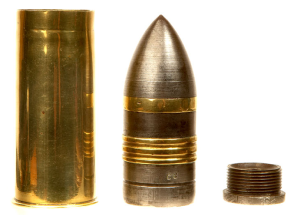
Against the background of complete confusion and disarray, the plant launched the production of 37-mm brass cartridge cases under the patents of Hotchkiss and Vickers.
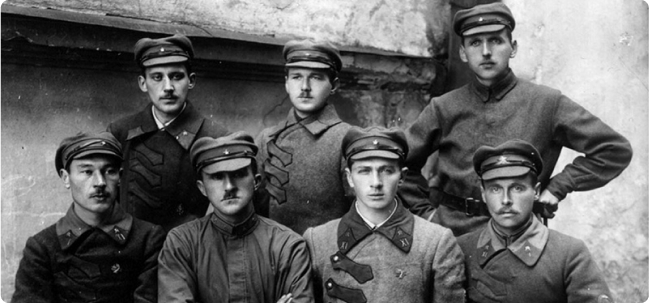
Following the October Revolution, production halted, and Benoit created a combat detachment from the workers, which voluntarily joined the Fifth Workers' and Peasants' Army. He received permission for this personally from the chairman of the Revolutionary Military Council, Leon Trotsky, with whom he talked on the eve of the storming of Kazan by the Red Army.
However, soon the Revolutionary Military Council ordered Benois to leave behind the front and resume production of sonometric stations.Nikolai basically gave away the Paratsky enterprise to the Soviet Republic. He himself returned to Petrograd, where he was once again deploying production at the Okhta Mechanical Plant called Burevestnik.
Once the need for Benoit devices was well-understood, in 1919 he was appointed chairman of the Board of the United Precision Mechanics Factories of the Petrograd Soviet of National Economy, and six months later he was transferred to Moscow to the post of deputy chairman of the Main Board of the United Precision Mechanics Factories.
But the inventor had ill-wishers who wrote an anonymous letter to the Supreme Council of the Narkhoz saying: "The former capitalist is seeking profits imposing his contrived devices upon the country of workers and peasants." Someone told the discouraged designer that the invention could be pushed forward only by giving a bribe to a prominent official. Eventually, Benoit was caught red–handed and was sentenced to eight years in prison.
In prison, Benoit made three new inventions, remaining the first and only expert in his field.

The name of Nikolai Benois, an ardent patriot of Russia, needs wide recognition and perpetuation.
These are not just beautiful words. This is the truth, multiplied by the traditions and experience in creating complex high-tech devices by generations of the best engineering school of Russia named after Nikolai Albertovich Benois.